Key points
- The CDC advises cleaning pet beds, blankets and habitats every week, following the instructions on the tag.
- The AKC suggests vacuuming hair off before washing, because wet hair clumps and can clog a washer.
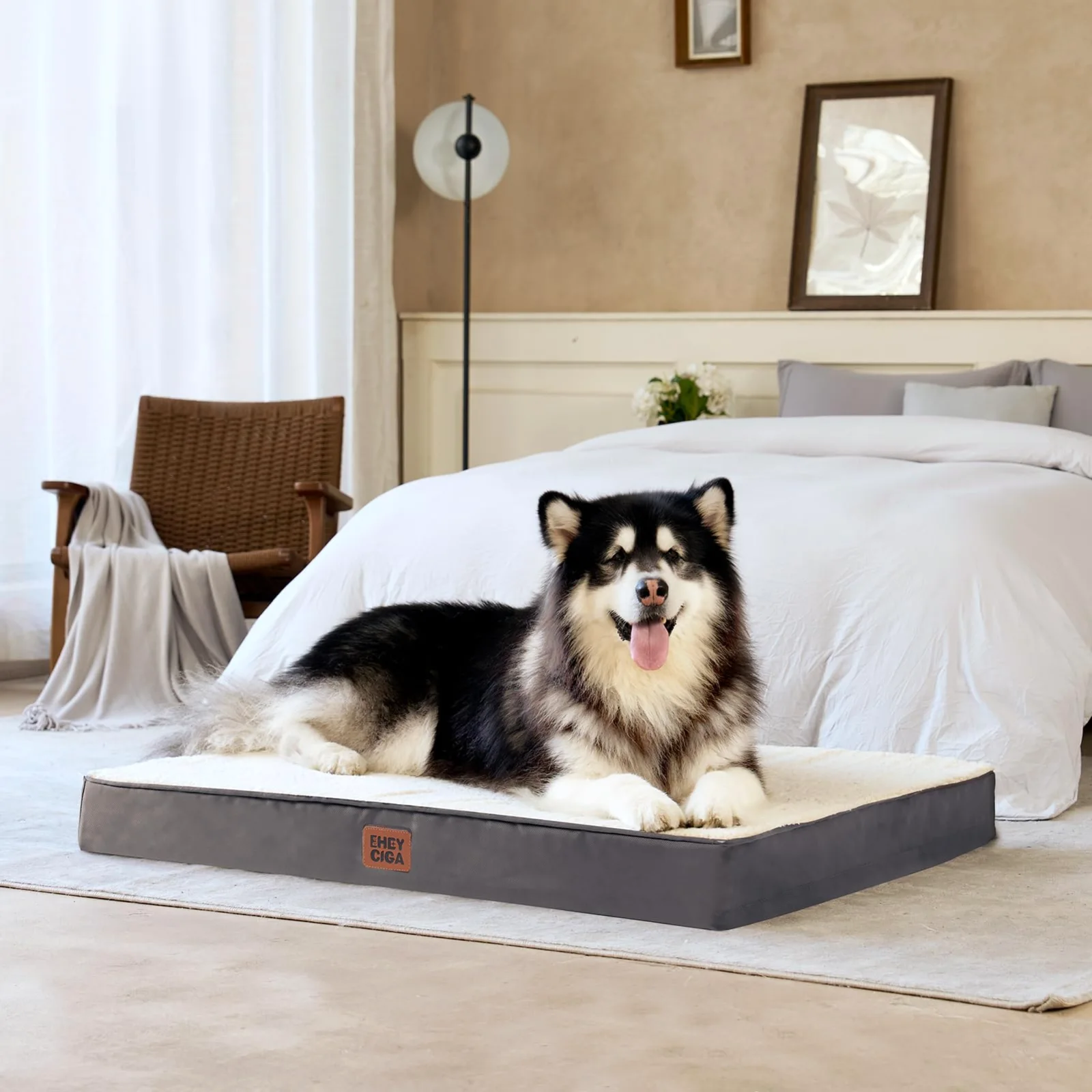
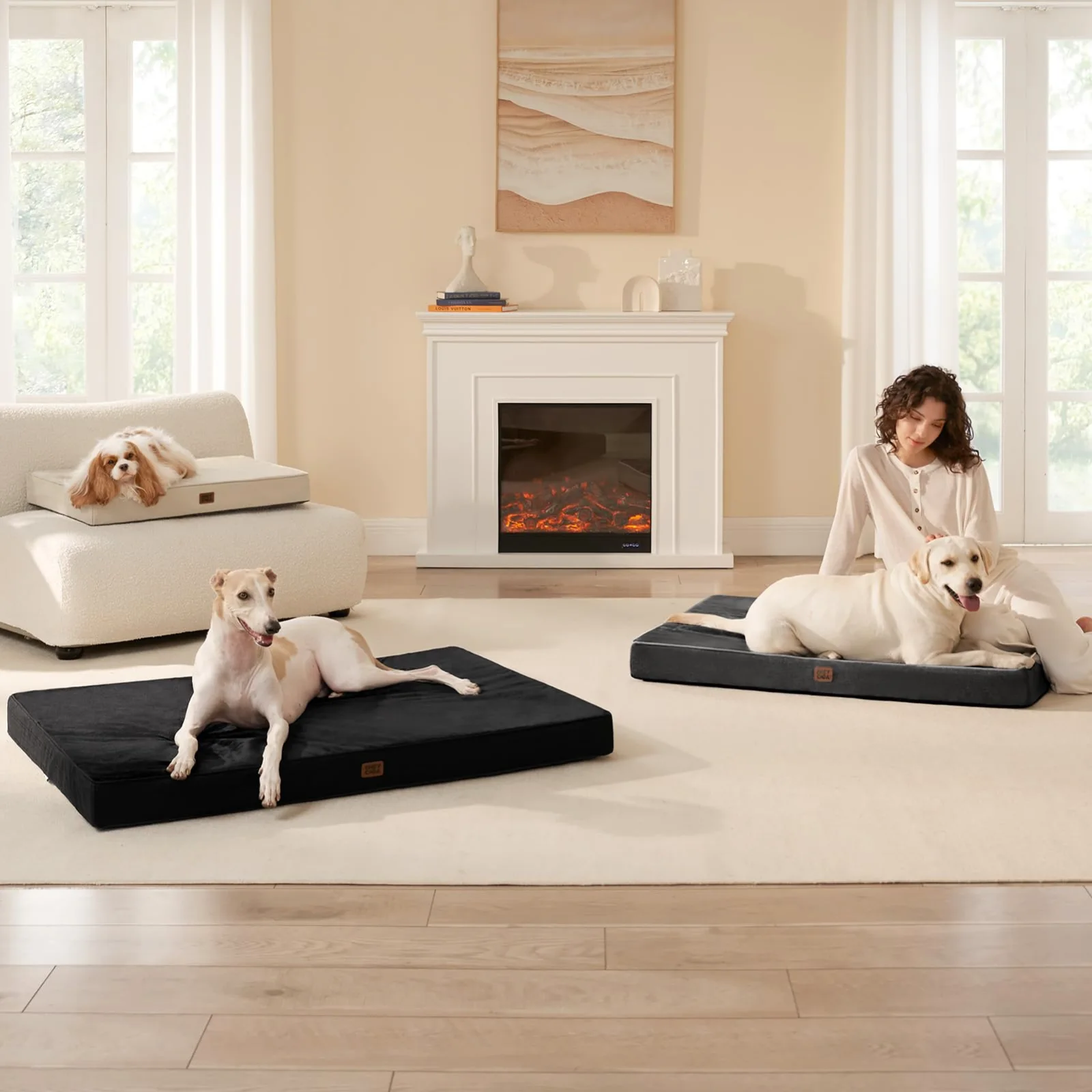
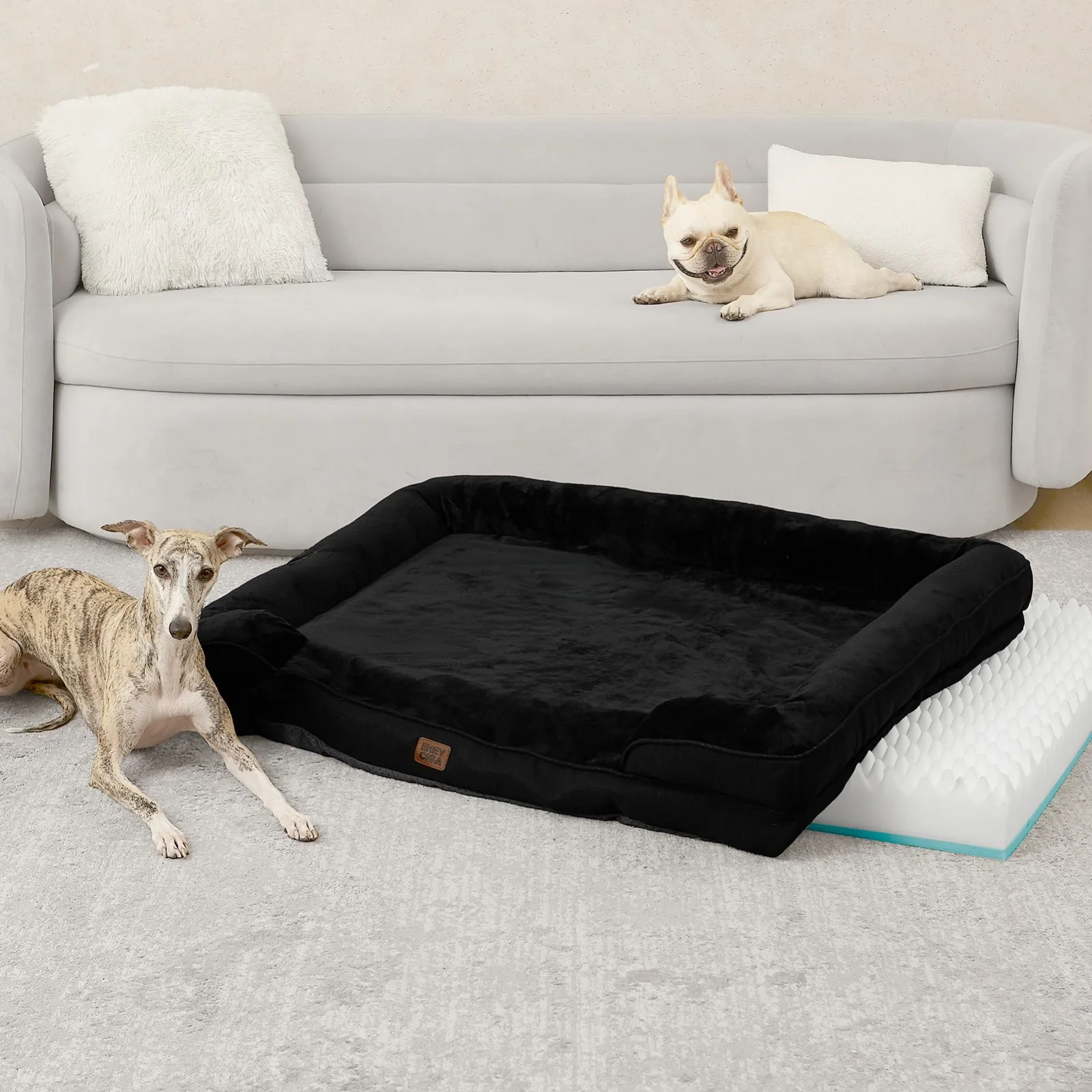
- On our foam beds the cover zips off for the washer, and the foam is never washed.
- Let a thick bed dry completely before your dog lies on it again, the AKC advises.
How often
The Centers for Disease Control and Prevention lists pet beds, blankets and habitats among the things to clean every week. The American Kennel Club cites the same weekly rhythm, and it adds that a removable bed cover can let you wash the main bed less often. That is how our foam beds are built: the cover takes the weekly wash, and the foam inside stays where it is.
Weekly is a starting point, not a rule you will be marked on. A puppy, an older dog with accidents or a dog that comes in muddy every evening may need the cover off more often. A cat that naps on a plush bed now and then may need it less.
Take the hair off first
The AKC explains why: mixed with water, dog hair clumps up and can clog a washing machine. Before every wash, and between washes, vacuum the surface of the bed or go over it with a lint roller or a rubber glove. On a faux fur or sherpa top, brush with the nap and the hair comes up in strips.
Shake the cover outdoors if you can. On a bed with bolsters, run the vacuum along the seam where the bolster meets the base, which is where most of the hair ends up.
Foam beds: wash the cover, keep the foam dry
Every one of our foam beds tells you the same thing on its page: the foam is not washable. Water stays in foam for a long time, and a soaked slab will not dry through in a dryer. What makes a foam bed washable is the zip cover, and on most of our foam beds a waterproof film or liner sits under the top fabric to keep drool and spills out of the foam.
- 1
Vacuum the hair off the cover while it is still on the bed.
- 2
Unzip the cover and slide the foam out. On a sofa bed, take out the base foam and any loose bolster inserts.
- 3
Wash the cover on cold, on a gentle cycle. No bleach.
- 4
Tumble dry on low, or hang it to dry, then zip the foam back in once the cover is completely dry.
Plush beds and pads: the whole bed goes in
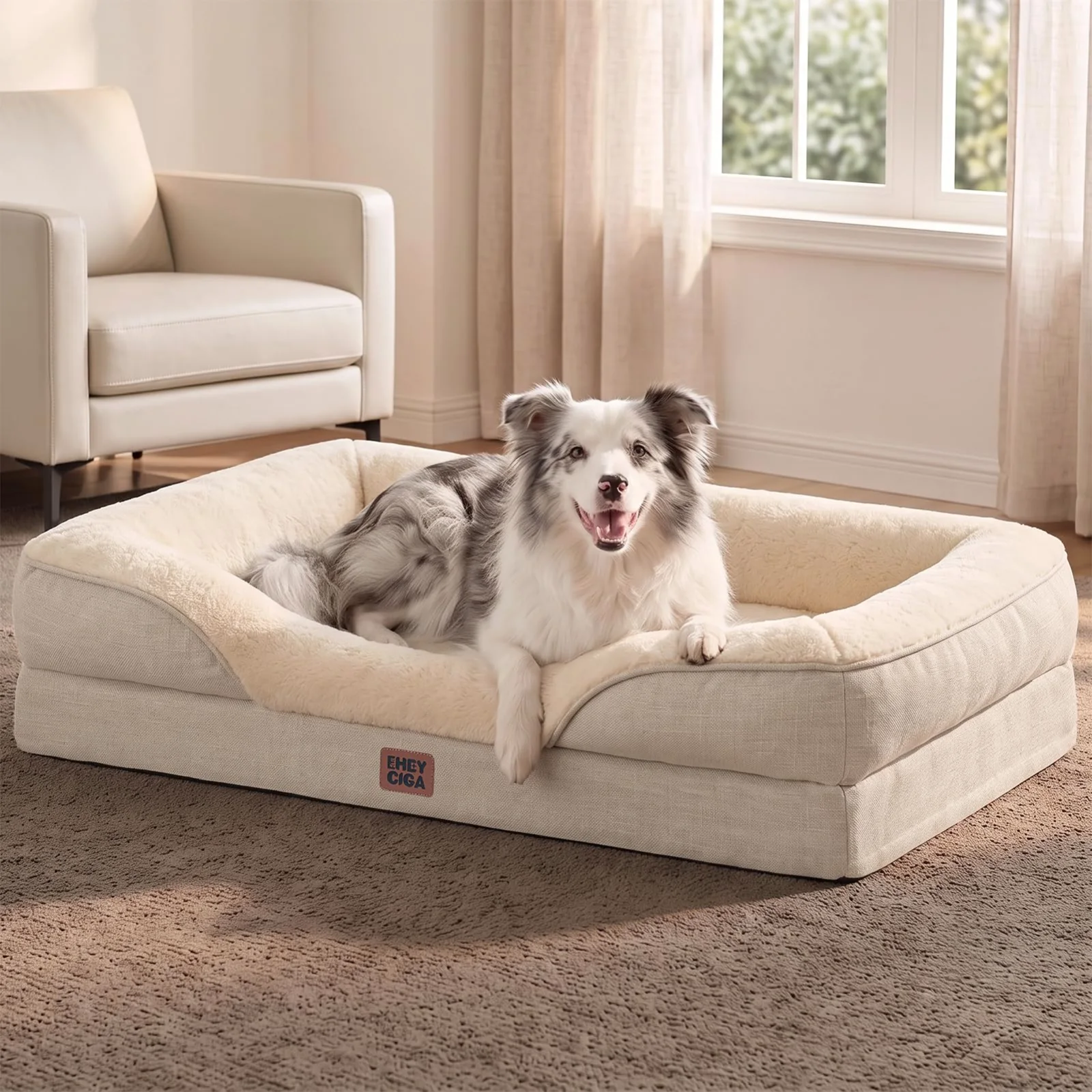
Our faux fur crate pad, plush kennel pad, waffle mat and most of our round beds have no foam to take out. They go into the washer whole, on cold and gentle, and come out to a low tumble dry. The fluffy faux fur crate pad is sewn closed for exactly that reason.
Size matters here. Our plush kennel pad says plainly that the two largest sizes need a big front-loading washer, larger than 3.5 cubic feet for the XL and 4.5 for the XXL, because a top-loader with an agitator can tear a large pad. If your machine is smaller, a laundromat machine does the job.
| Bed | What goes in the washer | What stays out |
|---|---|---|
| Foam sofa beds and couches | The zip cover | The foam base and bolster foam |
| Flat egg-crate and memory foam beds | The zip cover | The foam slab |
| Faux fur crate pad and plush kennel pad | The whole pad | Nothing |
| Round calming bed | The whole bed (the 36 in size: its outer cover) | Nothing |
| Foam dog stairs | The fleece cover | The foam |
Dry it all the way
The AKC warns that a damp bed encourages mold and mildew, and suggests waiting until a thick, fiber-filled bed is fully dry before your dog snuggles back into it. Squeeze a corner of a plush pad after drying: if it feels cool, it is still wet inside. Give it another low cycle or a few hours in the air.
The CDC notes that a dryer on its highest heat for 30 minutes disinfects soft items, but only when the item’s own instructions allow that heat. Our beds and covers ask for a low setting, so follow the tag over any general advice.
Fleas, and the case for a second cover
The AKC gives one more reason to keep to the weekly wash in warm months: fleas lay most of their eggs at night, so a dog bed can become heavily infested quickly. A weekly wash of the cover, at the temperature its tag allows, and a vacuum of the bed between washes take away what collects there. Treating the dog itself is a question for your veterinarian, not for the washing machine.
The simplest way to keep to a weekly wash is a second cover. While one cover is in the washer and then drying on low, the other is on the bed, and your dog does not spend a day on bare foam. If you are not sure which size your bed is, measure the foam base and compare it with the sizes in our dog bed size guide before you order a spare.
In a crate, the same idea works with pads. A plush kennel pad goes into the washer whole, so with two of them one can dry while the other is in the crate. Its care note asks for the same as our covers, cold water, a gentle cycle and a low tumble dry, and its two largest sizes need a big front-loading washer.
Detergent, and what to skip
Use an ordinary laundry detergent. The CDC suggests that a detergent with no dyes and no fragrance may be a better choice if your pet has sensitive skin. Skip bleach on our covers, as every care note of ours says.
You will find home remedies for odor online. The CDC points out that the evidence behind some of them, vinegar among them, is thin, so we leave them out. For a cover that still smells after a wash, a second wash does more than any additive. And if a cover is worn through, a replacement cover for our sofa bed is cheaper than a new bed.
Every product named here is part of the EHEYCIGA collection.