Key points
- Trouble with stairs, jumping onto couches or getting up from lying down are among the signs of arthritis Cornell lists.
- The AVMA names orthopedic pet beds and pet stairs and ramps among simple changes at home.
- The AAHA puts nonslip floors, stairs and orthopedic bedding beside the pain care a veterinarian prescribes.
- VCA suggests a bed your dog does not have to climb over, with a cover you can wash.
Start with the signs, and with your veterinarian
The Cornell Riney Canine Health Center lists difficulty navigating stairs, difficulty jumping onto couches and difficulty getting up from lying down among the signs of osteoarthritis in dogs. It also notes that arthritis is not only a disease of senior dogs and can start at any age. The American Veterinary Medical Association describes the same picture from the other side: an older pet may start to avoid running, jumping, climbing stairs or getting into the car.
Cornell is plain about the limits. There is no cure for osteoarthritis, but there are ways to slow it and to keep a dog comfortable, and those start with a veterinarian. Everything below is the part you can do at home alongside that care, not instead of it. The AVMA adds a line worth keeping in mind: age itself is not a disease.
A bed that supports the dog, and that it can get into
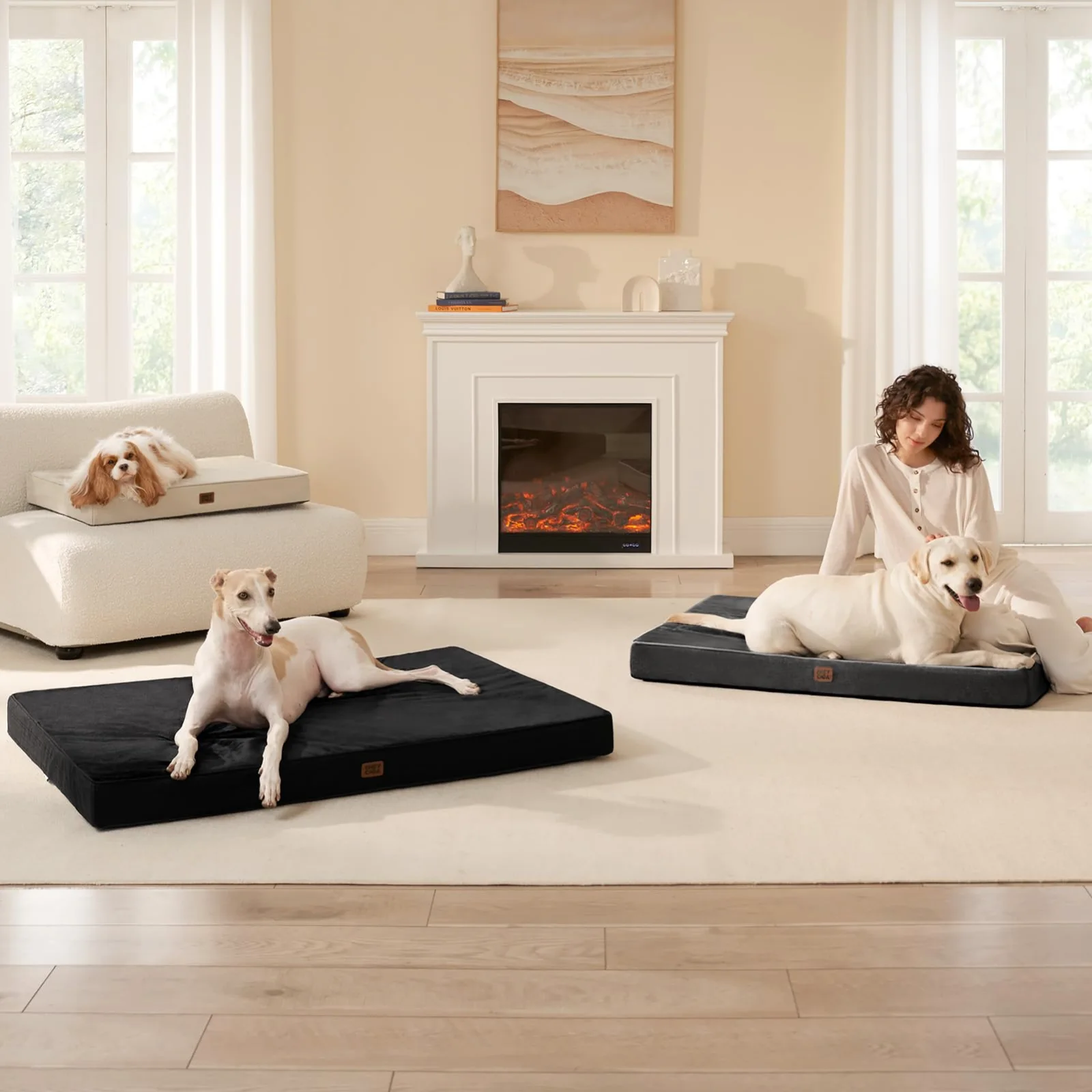
Among the simple changes at home, the AVMA names orthopedic pet beds. The American Animal Hospital Association lists orthopedic bedding as one of the lifestyle changes for pets with limited mobility, next to the pain medications a veterinarian may prescribe. The American Kennel Club suggests looking for a thick piece of polyurethane foam or memory foam, and notes that a memory foam bed does not need to be as thick as a plain foam bed to give the same support.
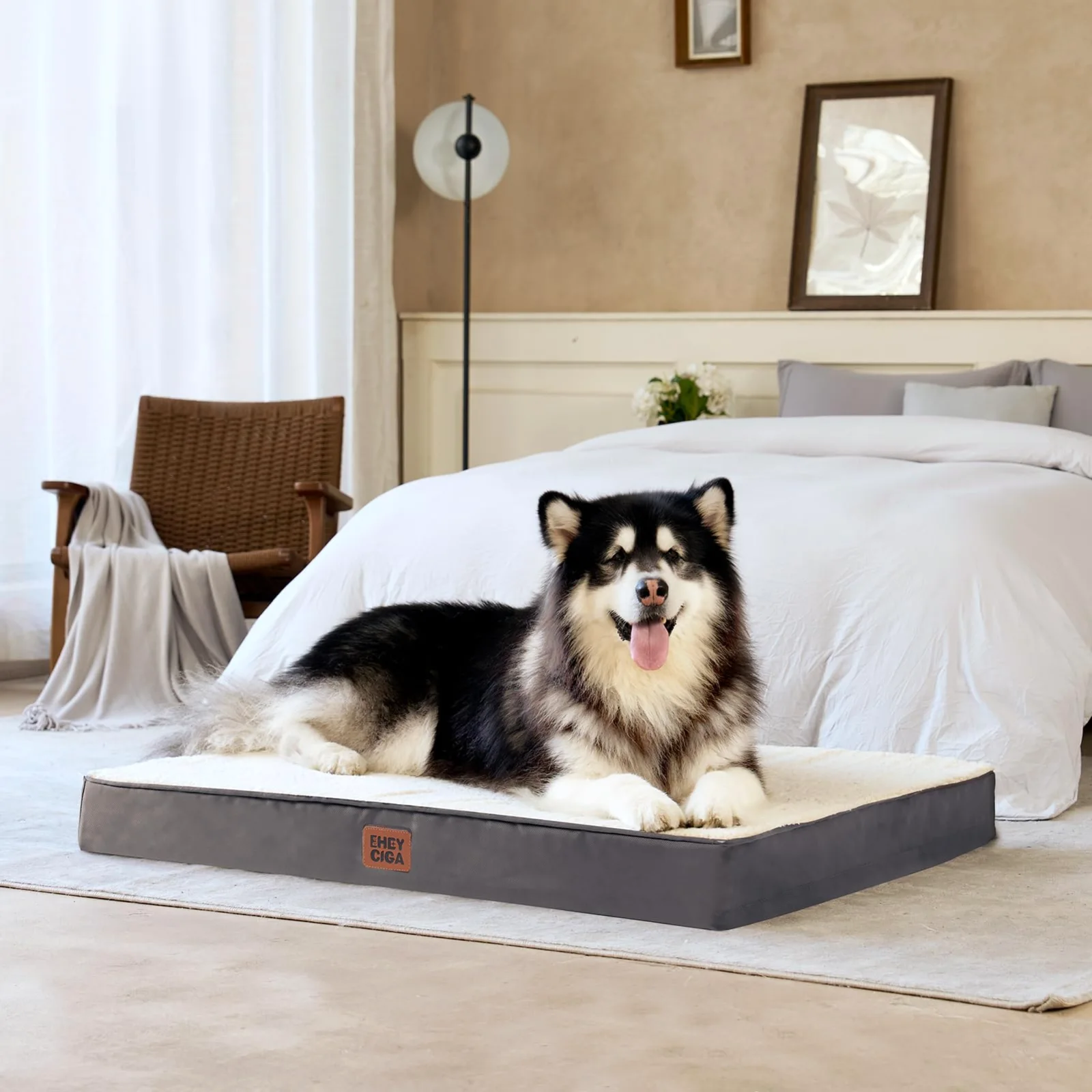
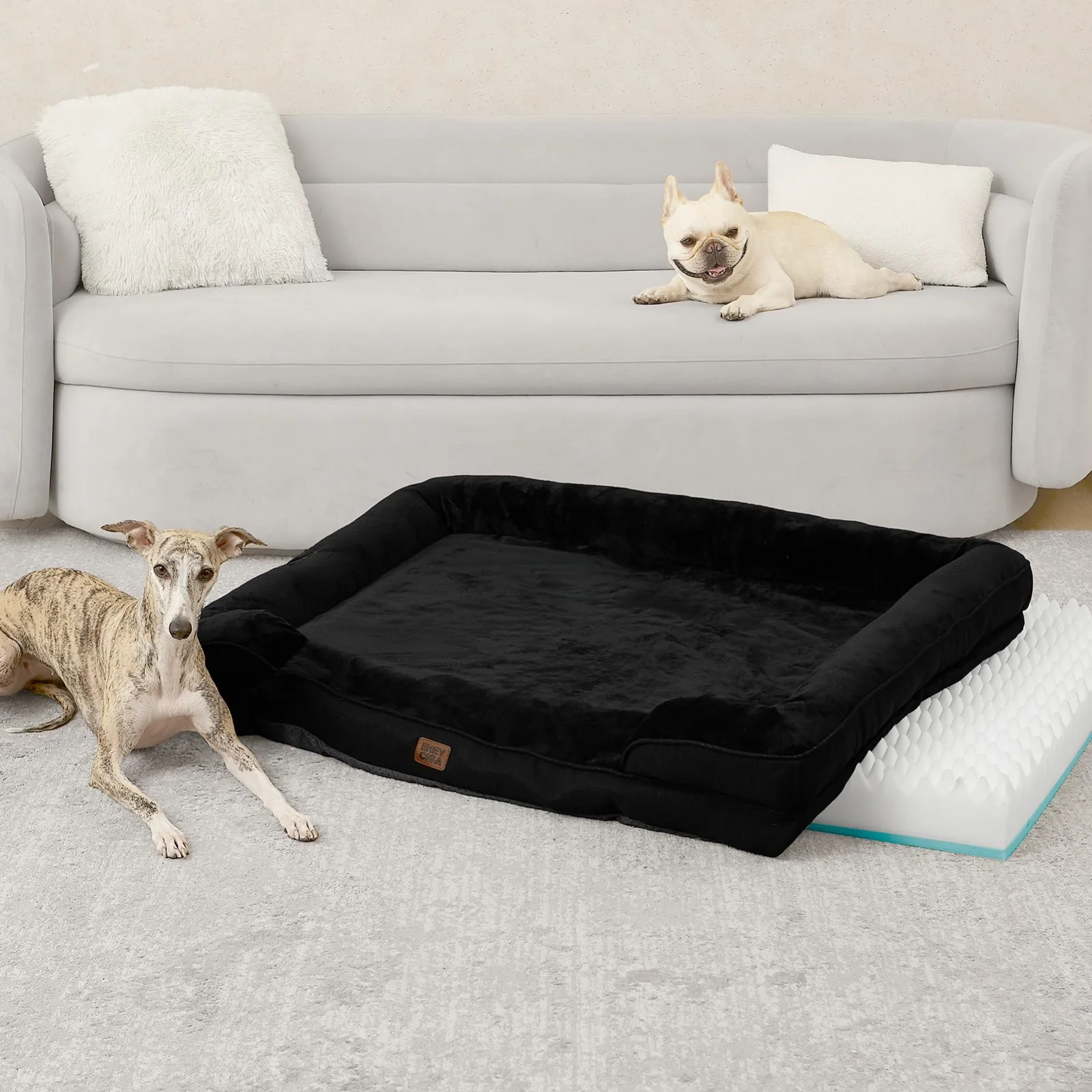
VCA Animal Hospitals adds a detail that matters for the shape: choose a bed your dog does not have to climb over or onto. A dog with stiff hips may manage a low flat mattress better than a bed with a tall rim all the way round. Our egg-crate orthopedic bed is a flat slab 3.5 inches deep with no bolsters at all, and our orthopedic sofa bed leaves the front open so a dog walks in instead of stepping over a wall.
If your dog likes to lean, a sofa bed with an open front is a fair compromise: bolsters to rest the head on, and a low side to walk in by. If it struggles to step over anything, start with the flat bed.
| Bed | How your dog gets on | Foam |
|---|---|---|
| Egg-crate orthopedic bed | Walks onto a flat 3.5 in slab, no rim | Egg-crate foam |
| Memory foam crate bed | Walks onto a flat 3 to 3.5 in mattress | Memory foam over egg-crate |
| Orthopedic sofa bed | Steps in at the open, low front | Memory foam over egg-crate |
| Memory foam dog couch | Steps over a bolster on every side | Memory foam over egg-crate |
Floors that do not slide
VCA puts it directly: hard flooring like hardwood, laminate or tile is not good for a dog that has trouble moving. It suggests rugs or runners that are non-slip and have no raised corners or edges that could trip a dog. Cornell lists non-slip rugs among the home measures for dogs with arthritis, and the AKC suggests non-slip area rugs or even inexpensive yoga mats in the places your dog walks every day.
Look at the route your dog takes between its bed, its water bowl and the door. A bed with a non-slip base is a start, since it will not skate away when your dog lies down or gets up. The floor around it is the other half. A rug that lies flat and grips is worth more than one that is thick and soft but slides.
Stairs for the bed and the sofa
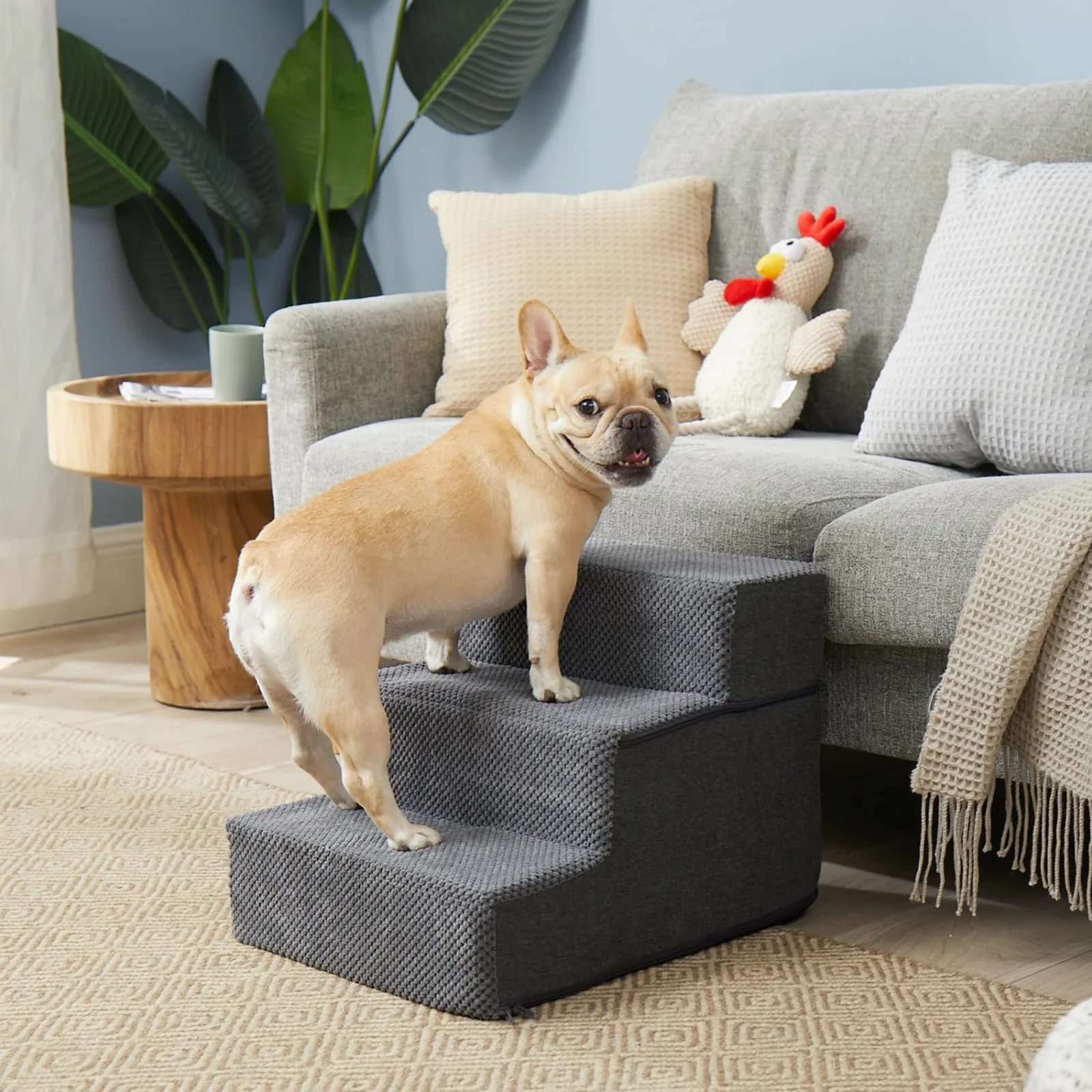
The AVMA and the AAHA both name pet stairs and ramps among the changes for an older or less mobile pet, and Cornell lists ramps to get onto beds, couches and into cars. The AKC writes that stairs suit an older dog that still has good balance and is fairly agile but has trouble jumping onto the bed or couch. Its advice for choosing them is specific: deep steps, an anti-skid surface, and a rating for your dog’s weight.
VCA adds a condition worth repeating. If your dog sleeps on your bed or another piece of furniture and your veterinarian says it is safe to continue, you can teach it to use stairs or a ramp. The AKC suggests placing them where there is a barrier on at least one side, and never pulling or pushing a dog up or down them.
Our foam dog stairs come in three, four and five steps, in a standard and an extra wide build, rated for pets up to 35 pounds. The curved stairs make each rise lower and each tread longer for a dog that finds tall steps hard. Measure from the floor to the top of the mattress and choose the set whose top step sits just below it.
Long backs and short legs
Some breeds carry a higher risk of intervertebral disc disease. Cornell lists Dachshunds, Toy and Miniature Poodles, Pekingese, Lhasa Apsos, German Shepherd Dogs, Doberman Pinschers, Beagles and Cocker Spaniels, and quotes an estimate from the American College of Veterinary Surgeons that Dachshunds alone account for 40 to 75 percent of cases. Among its suggestions is to keep jumps on and off a deck, a bed or a sofa to a minimum.
The AKC names Dachshunds, Pembroke Welsh Corgis and Basset Hounds as breeds predisposed to back problems because of their build, and suggests stairs for them as well as for toy breeds that have to take a running leap to reach the sofa. Stairs give a dog a way up and down that is not a jump. They do not prevent disc disease, and nothing in this guide does: if your dog shows pain in its back, cries when picked up or drags a leg, see a veterinarian the same day.
Keep the bed clean and dry
An older dog may have accidents, drool more or spend most of the day lying down. VCA suggests a bed or bed cover that goes in the washing machine. On our foam beds the cover zips off and goes in the washer, while the foam stays out, and most have a waterproof film or liner under the top fabric that keeps a spill from soaking into the foam. Our guide to washing a dog bed covers the rest.
Last, pick a spot where your dog already likes to rest, out of drafts and away from the busiest doorway, close enough to the family that it does not have to choose between comfort and company.
Every product named here is part of the EHEYCIGA range.